


For senior Vansh Mittal, fast food has become a convenient solution to refuel during a packed schedule that defines high school life. Between late rehearsals and meetings, grabbing something quick to eat has become part of his weekly routine.
“Probably once or twice a week,” Mittal said when asked how often he ate fast food. “I try not to make it a habit, but with everything going on senior year, it’s hard to avoid.”
Mittal is not alone in his reliance on fast food. According to a 2013-2016 study conducted by the CDC, 36.6% of adults consumed fast food on a given day. Meanwhile, the Pew Research Center found that about 69% of Americans say the increased cost of healthy food makes it more difficult for them to eat healthy. For families and students with busy schedules, there isn’t always time to prepare food at home, and even healthier fast food options like salads and smoothie bowls can be expensive. As a result, many turn to cheaper, less nutritious choices that are quick, affordable and convenient.
Culinary arts teacher Chad Young said the appeal of fast food among high school students not only lies in the convenience and speed, but also the consistency.
“It’s (fast food) not healthy by any means. One thing that fast food restaurants get right is consistency in their products. It’s always consistent,” Young said. “Once a teenager finds a product they like, they know it’s going to be the same, so they’ll get it every time.”
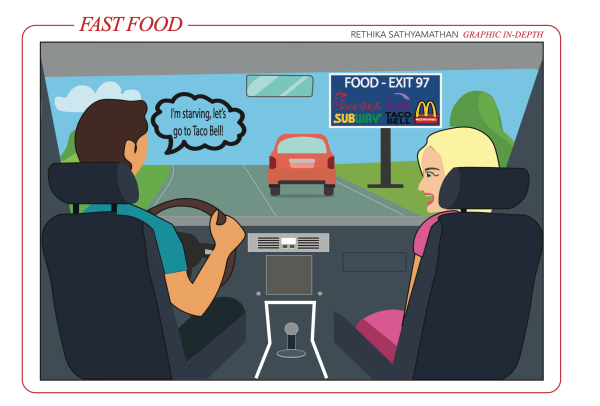
Fast and convenient
When it comes to grabbing a meal, Mittal says the convenience of fast food is what makes it most appealing.
“I don’t always have time to make something at home, and fast food is easy. I also like that I can see the nutrition info at places like Chipotle — it helps me feel like I’m at least making a better choice,” Mittal says.
Young added that while students try to maintain their nutrition through quick fixes, it can lead to unintended consequences.
“Some students will pack extra protein bars and energy bars, which is fine, but you have to be careful with that because too much of a good thing is a bad thing. A lot of them (students) aren’t supplementing it with water, so they get dehydrated,” Young said.
Similarly, Susan Kim, culinary student and sophomore, said that fast food is a practical option when time is limited.
“If we’re going somewhere early, then we’re not gonna make something (at home). We’ll probably just get fast food,” Kim said.
In addition, Mittal said he often chooses convenience over healthy options due to his tight schedule.
“The places I go to are all close to school or my route home. Even if something’s healthier, I’m not going to drive across town for it. It’s about what’s realistic with how busy we are,” Mittal said. “If I’m short on time, I’ll go to Subway or even Starbucks for a quick sandwich.”
Young said he’s noticed many of his students prioritize quick meals over nutritious ones when schedules get busy.
“When it comes to food choices, I think when someone’s busy or a student who is heavily involved in extracurricular activities, they don’t always make the healthier choices when it comes to food, which is unfortunate,” Young said.
Eating on a budget
Price often dictates what Mittal chooses to eat, and too often, healthier options are out of his budget.
“I’ll usually look for something under $10-15, which can be hard if you want something healthy. Smoothie bowls or salads can get expensive really fast,” he said. “I’ll look at places like CoreLife or Cava, but then one meal is like $13. It’s frustrating because you want to eat better, but it doesn’t always feel affordable.”
Kim also agrees with Mittal. She said she has noticed an increased price on produce when she goes shopping.
“Healthy food options have been getting more expensive now, like organic food and vegetables. It can be hard to get organic food, and fast food’s easier, because you can get a value meal for five bucks, even though it’s not healthy,” Kim said.
Young has also said that healthy food continues to rise in cost.
“Healthier food has definitely gotten more expensive than fast food, and it’s a shame that no one in our government at the moment is taking a stance on having better access to healthier foods,” Young said.”
Young also added that frequently eating fast food can negatively impact long-term health.
“Over time, fast food can cause heart diseases, obesity, diabetes, and hypertension. I, myself, suffer from hypertension so I have to be extremely careful of fried foods and salty foods and things of that nature,” Young said.
Despite the high cost of healthier options, Mittal has found a way to put together his own quick and nutritious meal.
“I really like Chipotle or Panera because they have more customizable options. If I’m trying to be healthier, I’ll do a bowl with brown rice and veggies or a salad,” Mittal said.

(Anoushka Jena)
Access and opportunity
Mittal also said he noticed differences in food choices depending on family routines and schedules.
“Some of my friends have parents who meal prep or cook a lot, and their diets are really balanced. Others have really packed schedules or work after school, so they rely more on fast food. Everyone’s situation looks different,” Mittal said
In many cases, family schedules and habits are closely tied to their socioeconomic situation, which can influence their food options. Mittal says the role of socioeconomic status is often underappreciated when it comes to student food choices.
“Some students can afford to eat at places like Panera or get Starbucks every day, while others go to cheaper places or bring food from home. It’s not always about preference — it’s about what’s accessible,” Mittal said.
Young said lower socioeconomic communities often rely more on fast food because healthier foods aren’t as accessible.
“Unfortunately, in lower socioeconomic communities, fast food is more readily available and there’s not as many high-end grocery stores. In some cases, there’s also food deserts, so there’s no access to food or healthier foods in that situation. And so, you know, you are a product of your environment,” Young said.
Through his experience with fast food and the availability of healthier options, Mittal said that he wishes healthy foods around Carmel could be more accessible and affordable.
“I think having more affordable, healthy options around Carmel would help,” Mittal said. “Maybe partnering with local places for student discounts or offering better grab-and-go food at school. Healthy food shouldn’t feel like a luxury.”