


In 2018, when debates surrounding the construction of a mosque in Carmel reached a climax, senior Rafan Tajwer was just ten years old. For Tajwer, these public discussions became the makings for his first encounters with overt Islamophobia, an experience that left a long-lasting impact. Even years later, Tajwer said he can vividly recall the widespread cultural dissonance sparked by the mosque’s establishment.
“There are a lot of minor things I notice when it comes to religious opposition. A lot of it is from when I was young when we were building a new mosque,” Tajwer said. “That was sort of the peak of anti-Islamic sentiment. All of the people coming out and being like ‘we don’t want this here’ was kind of bizarre, especially as a middle schooler. I have a vivid memory of my bus driver being at the city council meeting to (petition to) not build the mosque.”
Similarly, Ella Carlston, member of the church of Jesus Christ and the Latter Day Saints and junior, said she has been stereotyped because of her religion.
“My religion is often stereotyped by the idea of polygamy,” Carlston said. “Many people think that it is common practice [within my faith] to have multiple spouses, but in reality that is something that hasn’t been done for a long time.”
Such experiences as the ones faced by both Tajwer and Carlston are not uncommon. According to a study by the Pew Research Center, 57% of Americans believe that those who are religious experience some or a lot of discrimination. In addition, religious violence has risen in the past few years, with recent attacks on the LDS Church in Grand Blanc, Michigan, a mosque in the U.K and a synagogue in the U.K.
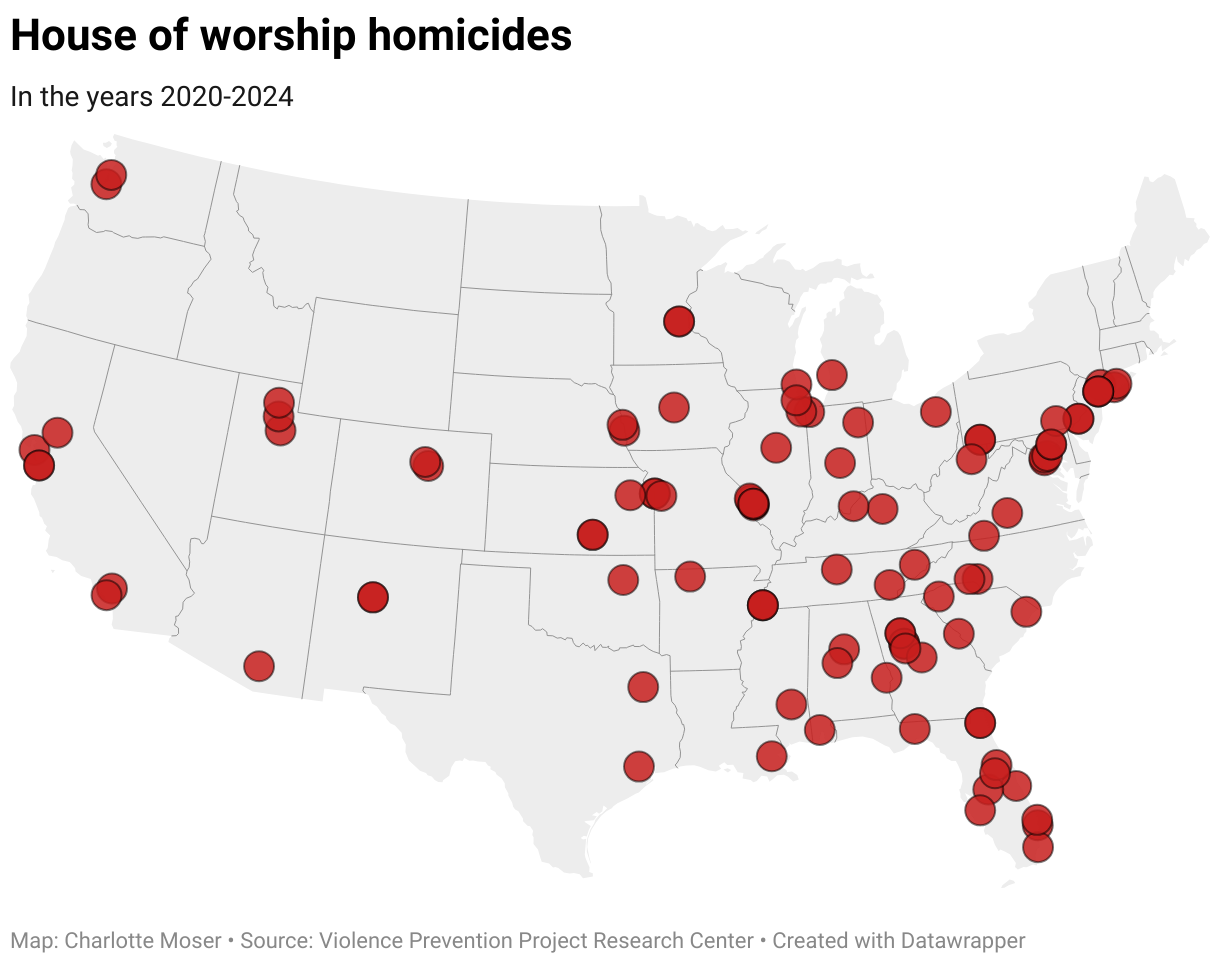
Tajwer said the main reason for the rise in religious hostility is because of fundamentalist movements across the globe.
“When you look around the world, you see a lot of more far-right sort of religious movements rising,” Tajwer said. “We can analyze a lot of things like Evangelism in the US or other brands of Christianity across Europe, and a lot of traditionalist movements in Islamic states like Pakistan and Saudi Arabia come to mind. It’s sort of shutting off a lot of communication between religions.”
Yaniv Schmukler, Director of Community Engagement at the Indianapolis Jewish Community Relations Council (JCRC), said he has witnessed an increase in antisemitic sentiments in recent years.
“We have seen a sharp rise in antisemitic rhetoric and violence around the world, in the U.S., and in Indiana. This has left many feeling vulnerable, as even our most familiar spaces require heightened security,” Schmukler said. “At the same time, many have deepened their Jewish engagement, finding comfort and strength in community.”
Much like the Jewish community, members of the Church of Jesus Christ have adapted quickly as a result of religiously motivated attacks. Following the tragedy in Michigan, Carlston said she’s noticed increased security at her own church.
“I have seen conflict rise for sure all throughout the world like in Michigan. (The event) was really tragic and makes me really sad, and I have seen increased security for our church building (since then) even though (the tragedy) happened all the way in Michigan,” Carlston said.
While the attack was a moment of mourning for those in the Church of Jesus Christ, Carlston said she found the community’s response touching.
“But I think religious people and how they respond to (religious violence) have been really helpful because like those people in Michigan, like the church members have raised a lot of money for like the family of the person who crashed his car in the building,” Carlston said.

Carmel and Religion
Despite his experiences when the city was first building the mosque, Tajwer said Carmel has largely been accepting of diverse religions.
“The culture here has been very accepting of other perspectives, especially when it comes to religions, and that’s opened up a lot of religious conversations,” Tajwer said.
Carlston expressed a similar sentiment. She said she has felt welcomed into the community at Carmel.
I think for the most part, people are pretty kind (regarding religion) in Carmel, which is awesome,” she said.
While the Greater Indianapolis community is mostly supportive, Schmukler said it’s important to recognize that hate-based attacks still do occur against minority religions. Despite these attacks however, these communities have stood strong and in solidarity.
“Local Jewish institutions regularly receive threats, requiring significant investment in security and constant vigilance. In 2018, a synagogue in Carmel was vandalized with antisemitic symbols. In recent years, Hindu temples, Black churches, and mosques have also been targeted by threats and acts of vandalism,” Schmukler said. “Yet, in the aftermath of these terrible incidents, communities have come together in solidarity gatherings, standing side by side to affirm that an attack on one community is an attack on all.”
Schmukler added that he is grateful for the support of non-Jewish allies following attacks, on both the local and international level.
“We are deeply grateful for the support of our community partners. In the wake of major antisemitic incidents, many of our non-Jewish friends reach out to express condolences and solidarity,” Schmukler said. “Those gestures mean a great deal to our community and remind us we are not alone.”
Schmukler added that positive gestures between religious communities are necessary to ensure a supportive community.
“These moments highlight the importance of interfaith and intercultural dialogue in helping communities heal and prevent misunderstandings,” he said. “Ongoing dialogue and partnership build the trust needed to respond when challenges arise.”

Fighting prejudice
Both Tajwer and Schmukler noted the importance of education in facilitating healthy cross-cultural exchanges.
Schmukler said, “Schools play a vital role in fostering understanding across religious and cultural communities. They can do this by encouraging dialogue and collaboration between student groups, coordinating interfaith or intercultural programs, and empowering students to lead initiatives that challenge stereotypes and normalize diversity.”
Tajwer, however, noted apparent inadequacies in the way that complex topics like religion are breached in the classroom.
“When it comes to a lot of history classes or classes that are in a position to teach about things like this, I’ve noticed that it does often boil down to a us-versus-them scenario,” Tajwer said. “In a historical context, I think it’s important to look (into the past) and realize (these religious tensions) shouldn’t be applicable anymore, and I think that component is often disregarded in a lot of history classes.”
Furthermore, with the advent of social media and an increasingly interconnected world, both Carlston and Shmukler identified complications in how individuals form opinions about other cultures and religions.
Schmukler said, “One of the greatest obstacles to interreligious and intercultural understanding is the spread of misinformation online. Social media often amplifies conspiracy theories and hateful messages about minority religious groups, which shapes public perception and at times inspires violence.”
On the other hand, Carlston said she makes a concerted effort to build relationships and expose herself to people with diverse viewpoints, cultural backgrounds, and religious beliefs. She added that social media often facilitates those relationships.
“I always try to talk to all kinds of people,” Carlston said. “I have a couple of Jewish friends, so I always ask them about their beliefs and why they believe the things they do. This for me, is sort of an exercise in tolerance. I like to learn about other people’s cultures and religions and I can imagine that social media allows for some of that exchange.”
Global context
While in many cases, social media is a tool for connection, it has also amplified global divide amid far-reaching world conflicts. As the Israel-Palestine conflict worsens, Tajwer said he disagrees with how the war is portrayed.
“It’s a very us versus them mentality (for many people). There’s a lot of group-think and (relations between Jews and Muslims) have gotten worse. It is important to recognize that no matter the religious background we are all humans, and there is no justification for religious violence,” he said.
Looking forward
Despite the ongoing prevalence of religious prejudice, Schmukler, Tajwer, and Carlston are optimistic for the future, emphasizing the role of community in dealing with overt aggression.
Schmukler said, “The Jewish community worldwide is bound by a powerful sense of shared identity and history. An attack on a Jewish person or institution anywhere in the world is felt everywhere. When antisemitic incidents occur, they reverberate through every synagogue, home, and organization.”
Carlston shared this sentiment, explaining that she values her religious community as her support system during difficult times.
She said, “Our church is a safe space for us to express ourselves. In my opinion we have done a good job supporting and rallying around people who need help or are struggling especially in regards to (religious extremism).”
Beyond the emotional support that a sense of community provides, Schmukler also noted the increased availability of community support resources for those in need.
He said, “In response to incidents of antisemitic violence, the JCRC, Jewish Family Services (JFS), and the Federation work together to provide both emotional and communal support. JFS offers services to individuals and families, helping them overcome uncertainty. Meanwhile, the Federation and JCRC organize community gatherings, educational programs, and public advocacy efforts.”
Keira • Oct 29, 2025 at 1:44 pm
very insightful! good job ryan and riva!