
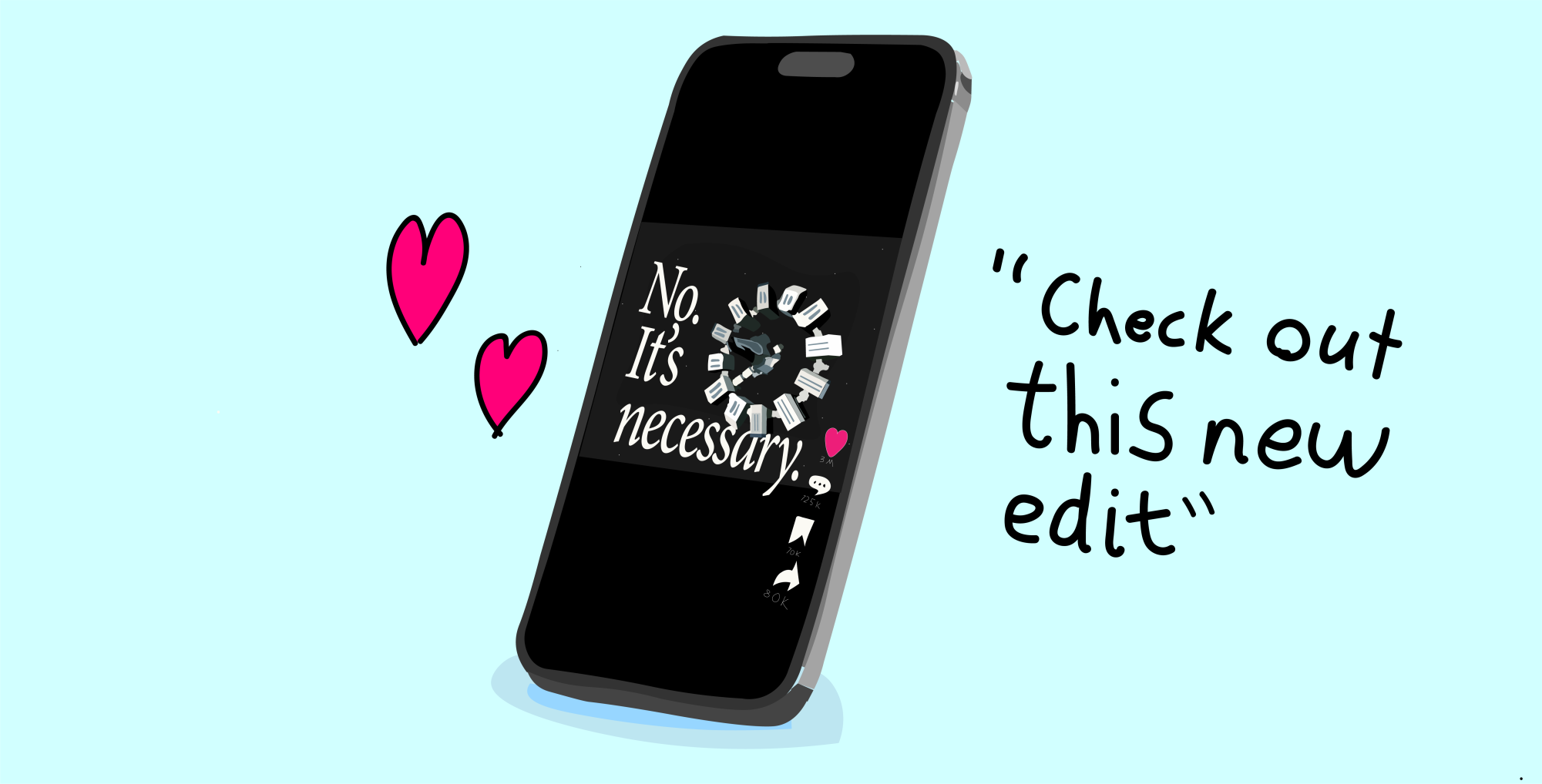

For junior Kanah Lagus, the pieces of media she loves go beyond simple entertainment, acting as anchors in her life.
“For me, being in a fandom means to really like the media and to connect with those that also like that media,” Lagus said. “It means finding that community of fans.”
In an era where much of teenage life unfolds online, shared interests around television shows, video games and niche creative communities increasingly serve as the foundation for meaningful connection. For some students, these digital spaces are vital environments of belonging, creativity and identity formation.
According to the National Institutes of Health, engaging with others in online fan communities can positively impact mental wellbeing and bring a strong sense of virtual community. A study found that fans who interacted frequently with other users online reported feeling more connected and supported.
Lagus said what motivates her to post about characters, like Viktor from “Arcane,” isn’t validation, but rather authenticity.
“I simply like those things and I love posting about them,” she said. “I love expressing myself and the things I like, no matter if it may be considered ‘cringe’ by others. I’d rather have fun interests that I genuinely enjoy rather than trying to suppress my likes or trying to go with interests that other people like just to fit in. I hope that people learn that they should enjoy themselves and not be afraid to express themselves.”
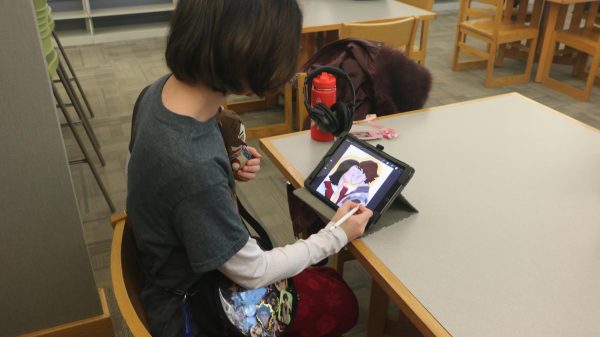
(Mady Kiser)
Her experience represents a significant change in how teenagers develop a sense of self. Online spaces allow young people to bypass geographic limitations and instead build community around hyper-specific shared passions. What may feel isolating in real life can feel celebrated on a timeline.
Fiber arts teacher Christopher Kuhne said he sees the impact of online fandom spill directly into his classroom.
“I’ve actually learned about a lot of different fandoms because of the way in which people will do things for that,” he added. “I can tell that this is from something that I don’t recognize, and I think that’s really cool.”
Kuhne said students frequently transform digital interests into tangible projects.
“I would say that of any class that I teach, fiber arts is probably the class that’s most heavily affected by that,” Kuhne said. “There is so much freedom to create a plushie from a fandom that you’re interested in or maybe do an embroidery that is along those sort of lines.
“I’ve actually learned about a lot of different fandoms because of the way in which people will do things for that,” he said. “I can tell that this is from something that I don’t recognize, and I think that’s really cool.”
For Kuhne, the act of physically creating something tied to a fandom adds a new dimension to connection.
“To me it’s really cool seeing people be able to connect,” he said. “Say, for instance, they’re working on something and someone doesn’t know what it is from, then they get to talk about it and share that interest with someone. It’s impossible to really replicate or replace that sort of connection.”
Kuhne acknowledged the role online spaces play in helping students feel understood, particularly those with niche interests.
“Everyone is seeking out a sense of belonging,” he said. “One of the biggest ways that people find that is getting connected with like-minded people that have similar niche interests. We all appreciate finding people who have those common interests and being able to talk with people who have that similar passion.”
Junior Aleta Lu said her initial draw to online fan communities came from a desire to stay active in her choice of media, even when people in her immediate life didn’t share the same interests.
“The original appeal of online fan spaces for me was the creation of discussion in online communities where I could feel connected to either my favorite movie, show, game or whatever media I was consuming at the time,” she said. “Staying in the loop, even if that meant the people around me in my life didn’t engage with the same things or like the same genre of media.”
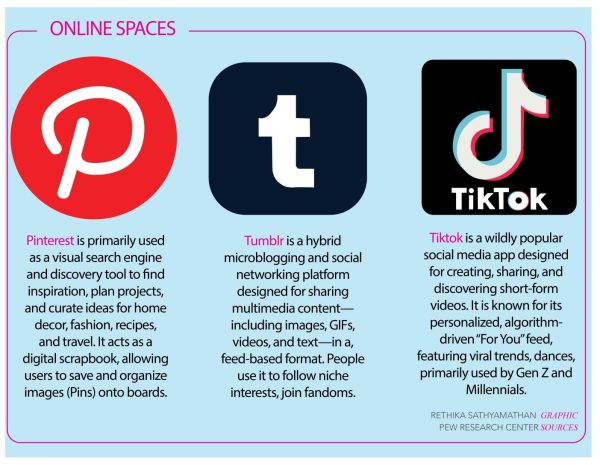
For many teenagers, including Lu, appreciation for a form of art is half of what being in a fandom means.
“I feel like whenever I see a carefully curated fan edit on TikTok of one of my favorite movies, shows or even celebrity with a good song, it gives me a sense of belonging and culture,” Lu said. “Knowing that other people also enjoyed what I watched and felt the same way about the characters and related to it in the same way I did is a really validating feeling.”
Unlike Lagus, who said she frequently posts and creates content, Lu said she often prefers to engage more quietly.
“For me, I don’t typically engage in discussions for online spaces because it feels better for me to just absorb and appreciate the media and feel the community in that way,” Lu said. “But I definitely feel more connected to people that have the same interests as me or are fans of the same underrated shows. It fosters a sense of closeness and relatability.”
Despite not actively posting anything, Lu said she feels inspired by the creativity she sees online.
“I haven’t created content in an online fanbase community, but I have thought about making an edit because I always feel inspired when I see a really impactful, cinematic and masterfully crafted edit,” Lu said. “Some small clips can evoke more emotion than the movie itself just through the artistic vision of the person really trying to capture the feeling and experience that a piece of media might give them.” “It offers a fresh new perspective. I feel like the ability to curate a feeling like that takes a lot of talent. I also like the idea of even linking two fandoms together to draw parallels between them.”
Unlike traditional friendships, which often form through proximity, online connections frequently begin with a shared enthusiasm. That shared enthusiasm can then evolve into something deeper.
For Lagus, posting consistently has shaped both her relationships and her creativity.
“For me, I post a lot of self-ship content, which is different from most who usually post general fandom content,” she said. “I tend to get very invested in the stories and often write things like fanfiction or fan theories. Posting consistently has allowed me to make more art and writing content, and allowed me to explore what things I like.”
Self-shipping is a common fandom practice in which individuals will pair themselves with a fictional character either romantically, platonically or in a familial sense.
Through fandoms, Lagus said she has connected not only with people who share the same favorite characters, but also with those who simply share the same intensity of passion.
“A big part of fandom is the community,” she said. “Interestingly enough, I often interact more with people who have different likes and medias as me, people that self-ship with characters from things I don’t know. Yet I still find myself being friends with these people because we both enjoy the same activity of gushing over our favorite characters.”
In these spaces, the common ground is not necessarily the exact media itself, but the act of caring deeply about something in particular, and from that, friendships can grow in unexpected ways.
“Sometimes the friends I have end up shipping with a character from one of the same franchises I do, so now we have another growing point as friends,” Lagus said.
However, online spaces also allow for something many teenagers struggle with in person, boundary-setting.
“Getting into the community has also allowed me to set boundaries with people,” she said. “I block people I don’t like with ease, and I find it easier to tell people when I’m uncomfortable with things whether it’s related to fandom or not.”
Online fandom spaces can function as both social training grounds and protective environments. Users curate their feeds, remove negativity and gravitate toward affirming interactions, something not always possible in physical spaces.
“Fandom spaces online are like an escape because I get to express myself better online,” Lagus said. “It’s a support system because I’ve made many friends there, and a creative outlet because now I’ve found something to put a lot of passion and work into.”
Similar to Lu, Kuhne also said he participates in creative online spaces in smaller ways.
“There’s a lot of people that I follow on Instagram,” he said. “I have an Instagram for knitting and for painting and different things, and I try to follow other creators who do things that I feel inspired by.”
Lagus said the absence of shared interests can feel isolating, especially around people who are less accepting.
“Sometimes I’ve been surrounded by people that don’t talk about specific media, or only have a surface level interest in things,” she said. “I’ve never seen “Gossip Girl,” “Stranger Things,” or anything like that. So it’s hard to connect to others.”
Lagus also said she often feels like she’s on the outside of the discussion, but the disconnect goes deeper than simply not recognizing a title.
“Sometimes people can be judgmental,” she said. “Many times I’ve been bullied or targeted due to being so open about simply liking fictional characters. Even from people that I thought were my friends, I’ve had them judge me.”
In those moments, Lagus said she has had to reevaluate what friendship means to her.
“When things become like that, I just have to choose who I want to keep as my friend,” she said. “If someone can’t accept me for a hobby and interest that doesn’t hurt anyone, then there’s no point in being their friend.”
Despite that, Lagus said the rare moments of real understanding feel even more meaningful.
“It’s always a surprise to meet someone that has the same interests as me, or will let me talk to them about my interests, something I don’t get to do often outside of social media,” Lagus said. “Overall, it’s harder to talk to people at school about these things, but it’s a delight and a blessing to meet someone who gets me. It’s that same feeling of community that being online can give me.”