

The current era of fashion provides a unique opportunity for each person to define themselves and their own personal style through the lens of sustainability. For many students, thrifting influences many aspects of their lives, from the unique pieces to add to their closets to a growing awareness of their environmental impact.
Senior Zoya Husain said the rise in popularity of vintage clothing has been significant in the current generation. As her generation has come of age, their style and culture has been significantly shaped by concepts of both consumerism and individual expression.
“Thrifting has gained a lot of popularity within mainstream culture over the past decade,” Husain said. “The growth in popularity of ‘vintage’ styling and fashion has been especially significant in thrifting culture.”
Fashion teacher Darcie Stanisic said the public perception of buying secondhand has changed significantly from a stigma of necessity to a symbol of coolness.
“10 years ago, people might have hid the fact they bought clothes second-hand to avoid being seen as low-income,” Stanisic said. “Now, it is more common for people to be more open about thrifting and finding unique or expensive pieces for a low-price.”
As people find new ways to stand out in a society where following trends are encouraged and individualism is leached out, the decline in the quality of modern fast-fashion and the high cost of new clothing has pushed shoppers toward thrifting and the circular economy. By nature, people want to own things that no one else has; buying vintage or secondhand “one-of-a-kind” pieces helps a person stand out in a way that brands online or at the mall cannot.
Husain said the growth in popularity of vintage clothing has been significant with the rise of the Gen Z generation. She said that while it is undeniable that people are less able to afford big retailers, thrifting has become a better way for individuals to express themselves and an outlet for conscious consumerism.
“Thrifting is one of the last and most prominent pillars of young counter-culture,” Husain said.
Social Media’s Impact
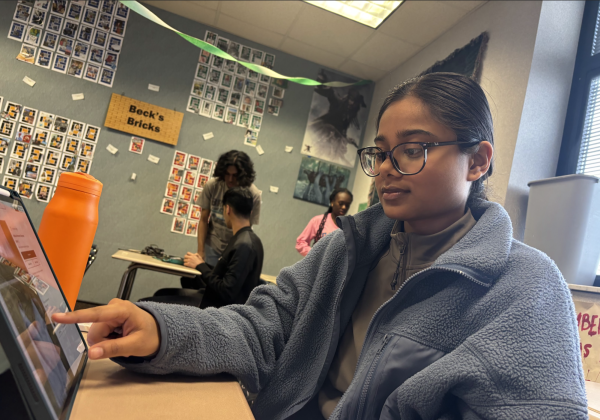
Social media platforms such as TikTok and Instagram have had a surplus of thrift hauls and vintage styling videos. These digital platforms have played a massive role in the increase in popularity of secondhand shopping; the rapid normalization of thrifting reaching the wider public can be attributed to online spaces. While the rise in popularity is both good for the environment and self expression, there is also a side effect: as demand goes up, so do the prices.
Stanisic said she has seen social media turn shopping into a competitive hobby.
“Trends like ‘thrift hauls’ on TikTok and Instagram have turned shopping into entertainment,” she said. “This has made secondhand clothes more desirable, but it has also caused prices to rise because of the increased demand.”
Husain agreed, saying, ”Social media influencers’ ability to portray thrifting as both a niche and popular way of shopping has definitely influenced the way average teenagers perceive secondhand clothing. The stigma around stores like Goodwill and Salvation Army is undeniably declining. Thrifting is something that’s being increasingly lost in today’s monoculture.”
Senior Aishwarya Ram said she also sees how platforms make the process of thrifting feel accessible and less overwhelming.
Ram said, “Platforms like TikTok and Instagram have so many videos with creators going thrifting, giving hauls or styling thrifted pieces, which makes thrifting feel fun and accessible while also normalizing secondhand clothing.”
Personal Style vs Sustainability
Ram said she sees a person’s interest in the environment as a large driver when it comes to choosing to buy secondhand items rather than new ones.
“Sustainability plays a huge role, I think,” Ram said. “People are more aware of fast fashion’s impact on the environment, so thrifting is a way to reduce waste and be more conscious.”
As climate change and the crisis surrounding the environment becomes more prominent, Stanisic said helping with the planet’s future comes with a change in shopping habits.
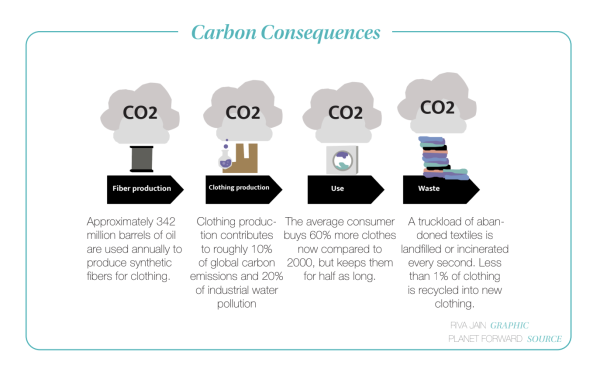
“They are aware of how much textile waste ends up in landfills and how much water is used to make new clothes. Thrifting is seen as a practical way to reduce their personal carbon footprint,” she said.
Husain said the lack of accountability from large corporations makes buying secondhand feel like a necessary action.
“As Gen Z comes of age and reckons with climate change and the lack of accountability being shown from corporations and world leaders, buying secondhand increasingly feels like the only thing young people can do to not be complicit in the destruction of our planet,” she said. “Sure, Big Oil may not care about the future of young people, but at least we can avoid fast fashion by switching from Zara to your local Goodwill.”
Shifting Demographics
Stanisic said the demographics of who shops at thrift stores is also much more varied now. She emphasized that while it used to be primarily low-income families or underprivileged individuals, now, thrifting is popular among all different income levels, including both low-income and wealthy consumers looking for anything from basic necessities to vintage designer pieces.
Ram said the spread of the trend across different groups has changed the energy and environment of the stores completely.
“While thrift stores were once mainly for low-income families, now they attract a much larger group of people, including teens, students and even influencers,” Ram said.
Husain said thrifting has lately become even more about things other than just clothes; thrifting is becoming a cultural community event. Thrift stores and pop-ups have become places where people can connect shared values and express artistic ideas and visions.
“There’s an increasingly wide range of people who choose to buy secondhand, especially as it becomes less about the clothes and more about a cultural community event,” Husain said. “Thrift pop-ups have become spaces for young people in general to connect with each other and often host a variety of artistic performances.”
Husain concluded that the undeniable priority of thrifting should be to allow for underprivileged or average people to be able to afford clothing and basic necessities, especially with the rising prices of clothing from big retailers. Despite this, she said she believes that there is a significant group of people who find the experience of thrifting to be more centered as an outlet of self-expression and individuality.
“It’s different for everyone, while it’s undeniable that on average people are less able to afford clothing from big retailers,” Husain said. “I think there’s a substantial group of people who find the experience of thrifting to be a better outlet of their individual expression.”
Stanisic agreed, saying that while saving money is still a benefit, the primary goal for the new audience has changed.
“It has definitely become more about personal style. While saving money is a benefit, many people thrift specifically to find ‘one-of-a-kind’ items that help them stand out. The goal is often to own something that no one else can buy at a standard retail store,” she said.