


While extracurricular activities are often promoted as open to all students, many say that the cost of participating can play a large role in who joins and who stays involved. Between factors such as fees, uniforms, equipment and lessons, financial barriers can shape who has access to certain extracurriculars and who doesn’t.
A 2019 University of Michigan Children’s Hospital poll found that the average American family spends around $408 each year on school sports, clubs and other activities due to the required fees, equipment and travel included. Students from lower income families are half as likely to participate in these activities due to the high costs.
Fees shape who gets to join
(Lucy Han)
Junior Addison Wright joined the Carmel Dance Marathon for many reasons, one of them being deeply personal. The club raises money for Riley’s Children’s Hospital including the Kate Carmichael Stillbirth Assessment program, which she said helped her family after the loss of her older brother.
“When I went to the actual Dance Marathon last year, I loved the community,” Wright said. “It was an incredible environment, and I wanted to be part of it for such a great cause.”
Wright added that while many students assume that participating in the House of Representatives at Carmel, or taking part in Dance Marathon is expensive, it doesn’t actually play a large role.
“Money can definitely help but I don’t think it plays a big role in joining or staying involved in extracurriculars,” she said.
These costs are exactly what pushed another student, senior Aishwarya Ram, to leave Dance Marathon all together after her freshman year. Ram said she joined the House of Representatives in her first year of high school because she said she was encouraged to get involved in something meaningful and add another extracurricular to her resume.
“While the club was pretty fun and the cause was really important I wasn’t sure if spending that much money in time was actually worth it for me in the long run,” Ram said.
The hidden expenses of sports in high school
Wright said she has seen cost limit opportunities in other areas. Her own experience in club volleyball told a different story, mirroring trends showing that competitive sports often require large financial commitments from the families of the athlete.
According to the Aspen Institute, the average cost of a single season of travel volleyball in the U.S. is $3,000 to $5,000 dollars, much above the national average of spending per household on student extracurriculars. With clubs requiring playing multiple seasons, tournament travel and rigorous training, many families quickly reach their financial limit.
“In my case, I played travel volleyball, which costs thousands of dollars for just a single season,” Wright said. “This is definitely not something everyone is able to do.”
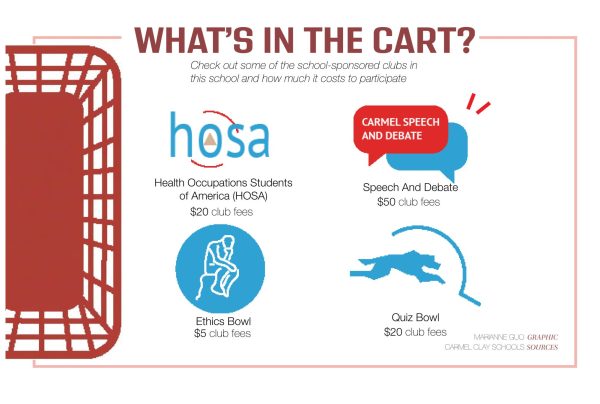
A long-term study from the National Institute of Health reflected this large financial burden posed by competitive activities. The study showed that students from wealthier families participate in competitive extracurriculars at far higher rates than those from lower income households. Wright agreed with the perspective, saying she saw firsthand how costs could narrow down the individuals participating and slim opportunities.
Freshen Avery Reinker participates in a wide array of clubs and activities, but the one she focuses on the most is tennis. She said that tennis can be very expensive throughout the season.
“I definitely see those costs showing up with things like purchasing jerseys and team gear,” she said. “Even on school teams, people overlook how much you end up spending.”
Reinker said these expenses go beyond buying uniforms.
“You have to get the right shoes and racquets, and even get new grips or lessons, which can be very expensive,” Reinker said.
Reinker said that a lot of students who don’t take part in an activity outside of school actually realize how much it costs.
“People who play other sports understand the commitment, but people who don’t play probably don’t,” she said.
Her observations about the sports reflect larger patterns. The Aspen Institute reports that the average high school tennis player spends around $1,200 every year on equipment, travel, lessons, travel and additional fees. The costs increase as the level of the player increases as well, reaching figures far beyond what average families can take on.
Reinker said these costs directly affect who can play at higher levels, saying she has seen students switch sports or quit entirely because they weren’t able to support their sport financially.
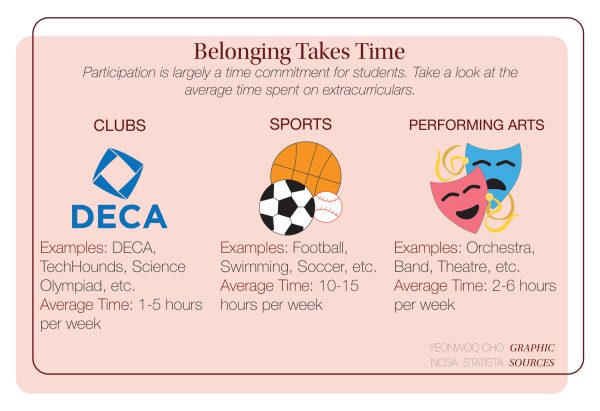
Do costs determine opportunity?
School counselor Melinda Stephan said she understands the concerns about extracurricular expenses.
“I think a lot of times, students and parents, families, think of extracurriculars as something to put on a resume or college application,” Stephan said. “I think the most important part of extracurriculars is the skills and the experiences that students can gain to maybe apply what theyŕe learning in the classroom or real world.”
Stephan said that this exclusion can be emotionally significant on the student´s part.
“The social aspect is absolutely important,” she said. “They (extracurriculars) give students an opportunity to become leaders… they give students those experiences where students don’t realize theyŕe building leadership skill because itś fun..”
Stephan also emphasized that many students don’t think about costs unless it is already a barrier.
“It would clearly be frustrating,” Stephan said. “I feel like if they can’t get involved or engaged in something they would like to participate in, that would be frustrating, and I would tell students in those situations to have a conversation with their counselor.”
How schools could help
Stephan, Wright and Reinker all agreed on one thing: while schools can’t realistically get rid of all costs, there are important steps they could take to close the gap and allow more students to be able to get involved.
Wright said, “I’d probably say taking that extra step to put out resources for the kids that need it. Even just advertising financial help more openly could change things.”
Ram had a similar idea to Wright, saying “There should be clearer ways for students to ask for financial help, in a way that they can also feel comfortable while getting the aid they need to be able to take part in the activities they want to be in.”
While Reinker also thought Wright and Ram’s ideas were great, she said a more practical approach might be better.
“I would change the price of gear so that everyone at least has the chance to try out tennis,” Reinker said. “It shouldn’t be so expensive just to get started.”
Stephan said awareness and destigmatizing financial help is key in this situation, especially so students could be more aware of where to get help.
“Schools should proactively communicate where students can find support,” she said. “Whether it’s fee waivers, recycled equipment programs, or community partnerships, the resources often exist, they’re just not visible enough. ”
Stephan said a good way to help deal with these disparities is for schools to expand gear sharing programs, provide more transparent breakdowns of activity fees and create more accessible assistance that doesn’t require students to disclose their financial hardship to people such as friends, classmates or maybe even coaches.
“When we make support systems private, accessible and well-publicized, participation rates rise,” Stephan said. “Students shouldn’t have to choose between belonging and affordability.”