
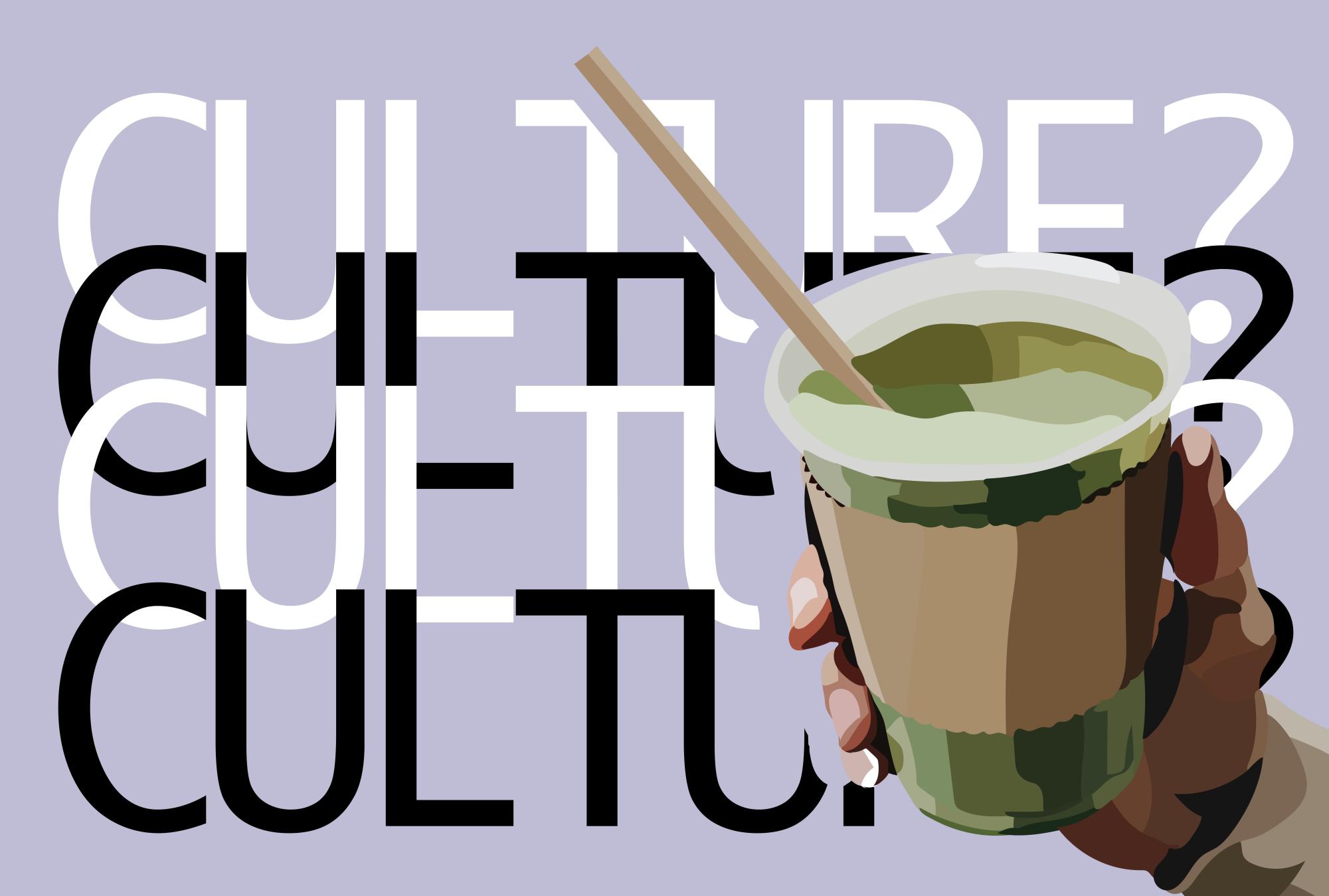


The modern social media era provides a unique opportunity for people to connect across countries, languages, and cultures. For Senior Krish Gajaria, being Indian influences many aspects of his life, from the food he eats at home to the holidays he celebrates. Gajaria said that accessing different cultures online can lead to both appropriation of those cultures through ignorant expression, as well as appreciation and awareness.
He said, “People sharing their cultural background and experiences on social media definitely provides an outlet for people to learn about it, which is a good thing. It gives them the opportunity to imitate it or try to copy those experiences for their own.”
As people imitate what they see online, cultures spreading to the masses inevitably results in the commercialization of certain items or practices, according to DC Fashion Week. By nature, people will emulate the styles they see online. When it comes to cultural clothes or accessories, wearing these items without knowledge of their background can be perceived as problematic.
Sophomore Amy Luo said the line that comes with appreciation is when its place of origin becomes lost amid trend-like attitudes. She said with the commercialization of Korean products and styles, things that originated from China loses its credibility, being replaced with a false label.
“I’m glad that the culture is spreading, but I wish that a lot more people were aware of where the culture is from, instead of just labeling it as Korean.” Luo said.
Social studies teacher Michael O’Toole said that social media can lead to controversy over “taking” another’s culture, which is no longer being taken seriously.
“In recent years, Black hairstyles are being appropriated by white culture. I’ve noticed it so much more because of the current political climate. Where there may have been some pushback before, now people will respond with ‘you’re being too sensitive’ and things like that,” he said.
Accessing different cultures through the internet leads to a central culture in which people imitate what they like to see. Some worry that this will diminish the original culture, while some celebrate the education it offers.
Social media’s impact
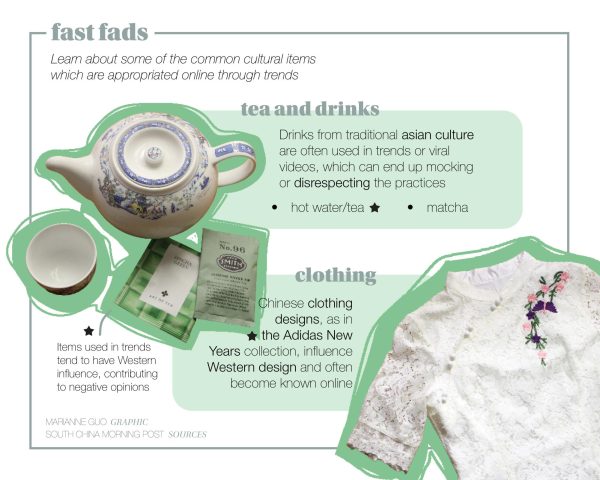
Social media apps such as Instagram or TikTok showcase posts of people in various cultural attire. Without understanding the meaning behind what they wear, viewers frequently copy those styles, unknowingly or indifferently “commercializing” cultural clothing.
Gajaria said he has seen people wear traditional Indian clothing online without understanding where it originated.
“Recently, my sister got married and the clothes we got for that were a part of Indian culture,” he said. “They tend to have jewelry on them and are very flashy. I’ve recently seen some weddings on social media online that kind of imitate these cultural facets in different parts of Indian culture or weddings that don’t necessarily include Indians.”
O’Toole said similarly, “So they’re being exposed to something new. But because of social media, on a lot of platforms like TikTok and things, the videos are typically very short, they’re very surface value. So they see things that look kind of cool and that’s nice they’re being exposed to something new, but there’s no history behind it. There’s no discussion of the culture behind it, so they see something that’s new and trending, and people do like to be included in things. So then they co-opt it.They just completely take it for themselves without understanding what it is.”
Luo said she also sees non-Chinese people participating in her Chinese culture through social media.
She said, “People on social media are just discovering some of the things in China they think are interesting or think are cool, and then if that reaches a small audience and that audience also agrees, it continues to spread. It’s also a bandwagon type of situation because a lot of trends die out, quickly or not quickly, but they always die out. An example would be like the Adidas jackets because they were inspired by the Tang dynasty, which is from a long time ago. They get fascinated by the uniqueness and that would be like how it spreads.”
Studies from Mabere Mark indicate that social media exposes people to so many new cultures and increases general willingness to accept new cultures. However, social media can also reinforce stereotypes as people use a single idol or influencer to represent an entire race or culture.
O’Toole said, “Social media just helps create more stereotypes because that’s all you’re really seeing. It then boils those people to just that. If you drive around America a lot, you will see a lot of American flags, and there’s nothing wrong with that. But If you were to do a TikTok video of that and you just see American flags everywhere, you get this idea that everyone in America values the American flag the same. If we then look at other cultures and we see those symbols just in a short video, it’d be like, oh, everybody from that culture must be the same.”
Appreciation vs. appropriation
Gajaria said people’s intentions inform the basis of appropriation or appreciation when it comes to
participating in another culture.
“I think it depends on the extent to which it’s performed,” he said. “What people do is a good way to increase global awareness and get a better understanding of different countries and their cultures, but you know I’ve also noticed people tend to have differing thoughts on African American hairstyles that are imitated by like you know, white people. I think to that extent it just depends on the intentions behind them and what the person is trying to convey.”
As mainstream media picks up on what influential people do and say, O’Toole said showing appreciation should come with understanding of the culture they are being influenced by.
“…so they themselves are saying, I appreciate your culture, and I understand what’s important to you. It’s all important, but I understand what I should not touch. And there are certain artists and bands who recognize that. They will do collabs with people from that and they show appreciation for it, where others are doing it just to make money.”
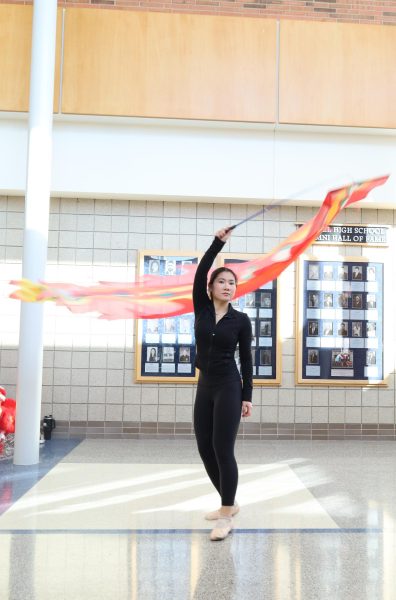
(Charlotte Moser)
Likewise, Gajaria said, “I think recognition is important for sure, kind of paying homage to the background, what it represents, and kind of showing you’re trying to get a better understanding for it rather than just trying to imitate it.”
O’Toole said certain attitudes accentuates the lack of care to learn about other cultures, only focusing on the gain that people are able to take from it.
“They want their food, and they want to steal certain styles, but when those people are then actually represented, and this goes with all sorts of cultures, they don’t have time for it. All of a sudden it makes them angry. We want to put in the least amount of effort, to take the things we want from you, but we don’t want to invest anymore,” He said.
Spreading awareness
O’Toole said the context of culture through education is important in the conversation of cultural awareness. He said there is a recognition of perspective to history, but how it is not the responsibility of people of another culture to educate those wanting to understand.
“Those cultures are forced to learn about European white culture, so there should be an exchange of ideas,” he said. “It’s not upon them if they want to, but a lot of America or Western Europe gets really offended when their default ideas or their default culture isn’t pushed forward, or they like a very clean version of things.”
Similarly, Gajaria said the importance of representation when spreading awareness comes from acknowledgement of where it came from
“I think that if there’s no recognition or no sense of homage to the culture from which the actions are originating, it’s important to kind of identify that or at least provide the proper identification to their actions,” he said.
Luo said spreading awareness is more than a trend, and that it requires understanding of one’s culture.
“As long as people are learning about Chinese culture and if they’re becoming more aware of it, then it’s okay.”
O’Toole said school elective classes offer a way to spread awareness.
“There are some elective classes at this high school that I think should be like a mandatory class. Even some of the mandatory classes, what’s included in that curriculum, I think should have an overhaul to include more cultural awareness.”
Gajaria said that it is normal to want to participate in other people’s traditions, and as long as education and appreciation are the foundation of the experience, sharing cultures is beneficial.
He said, “I don’t think that it’s always necessary to kind of shun people who might be trying to learn or experience different cultures, but there’s definitely a fine line between cultural appropriation and cultural appreciation, and I think that’s something to keep in mind.”