











![Cal Carmichael starting for Carmel last season. Carmichael said he wants to do everything he can to help the team win every time he steps on the mound. [Submitted: Cal Carmichael]](https://hilite.org/wp-content/uploads/2026/04/Screenshot-2026-04-13-3.40.48-PM.png)



















![Review: Project Hail Mary is a visually stunning film filled with deep emotion, humor and a heartfelt partnership [MUSE]](https://hilite.org/wp-content/uploads/2026/05/PHM2-2.jpg)
![Review: “Iron Lung” exemplifies the success of suspense [MUSE]](https://hilite.org/wp-content/uploads/2026/04/IronLung-1200x675.webp)
![Review: New F1 regulations prove to be anything but boring [MUSE]](https://hilite.org/wp-content/uploads/2026/04/2-1-1200x675.avif)
![“‘Wuthering Heights’” wasn’t a bad movie—it just wasn’t anything like the book [MUSE]](https://hilite.org/wp-content/uploads/2026/02/wutheringh-960x1200.webp)
![Review: Season 5 of “Stranger Things" delivered the perfect ending despite major mistakes [MUSE]](https://hilite.org/wp-content/uploads/2026/01/ems-810x1200.jpg)
![Review: “Zootopia 2” is a stunning and engaging sequel that elevates the universe [MUSE]](https://hilite.org/wp-content/uploads/2025/12/bjUWGw0Ao0qVWxagN3VCwBJHVo6-800x1200.jpg)
![Review: I have no critiques: “Demon Slayer: Infinity Castle” is amazing [MUSE]](https://hilite.org/wp-content/uploads/2025/12/MV5BOGQ3YWUzYjEtMTJiYy00ZjQ0LWI0YjktYjhiNGVhNGExYTM3XkEyXkFqcGc@._V1_FMjpg_UX1000_-797x1200.jpg)
![Review: Learning to say “I” with “The Fountainhead” [MUSE]](https://hilite.org/wp-content/uploads/2025/12/The_Fountain_Head_1943_1st_ed_-_Ayn_Rand.jpg)
![Review: Java House Fall Menu [MUSE]](https://hilite.org/wp-content/uploads/2025/12/Screenshot-2025-12-01-at-15.10.19-1200x618.png)
![Review: "When I Fly Towards You", cute, uplifting youth drama [MUSE]](https://hilite.org/wp-content/uploads/2023/09/When-I-Fly-Towards-You-Chinese-drama.png)
![Postcards from Muse: Hawaii Travel Diary [MUSE]](https://hilite.org/wp-content/uploads/2023/09/My-project-1-1200x1200.jpg)





![When stunts go too far: spectacle vs. safety [opinion]](https://hilite.org/wp-content/uploads/2025/10/Stunts-Cover-2-1200x809.png)
When I first found out that Tom Holland had been concussed on the “Spider-Man: Brand New Day” set, I couldn’t resist reading the story as more than just a headline. It wasn’t just some actor getting hurt, it was proof that in modern filmmaking, directors often place risk above reason. To me, it highlighted a concerning Hollywood trend: valuing realism over the safety of their actors.
Audiences have grown to crave authenticity. A superhero leaping across skyscrapers is more thrilling when not performed by a stunt double. A spy hanging onto a plane is more appealing when the actor does it. Filmmakers now market, not just the story, but the “realness” of the stunts, rendering actors’ physical endangerment as a selling point. The result is a culture where lethal stunts aren’t just performed—they’re sold as a badge of honor.
But that kind of “realism” comes at a price. Holland’s recent concussion shut down production entirely, AS.com reported, estimated to cost 10.5 million pounds (about $14 million) in expenses due to built up costs each day cameras weren’t rolling. In short, a single fault didn’t just injure an actor, it set back a whole multimillion-dollar production. And while that damage can be measured in dollars, the greater cost was Holland’s well-being.
This raises a larger question: why are we driving actors to the edge when safer alternatives exist? Set injuries are nothing new, but the risks seem to have escalated in recent years. While the characters they portray can readily heal from concussions, broken bones or permanent trauma, actors cannot. These injuries are not plot points, they are life-altering. And yet the industry continues to glamourize stunts performed without doubles, which embarks on a toxic cycle where risk is the hallmark of respect.
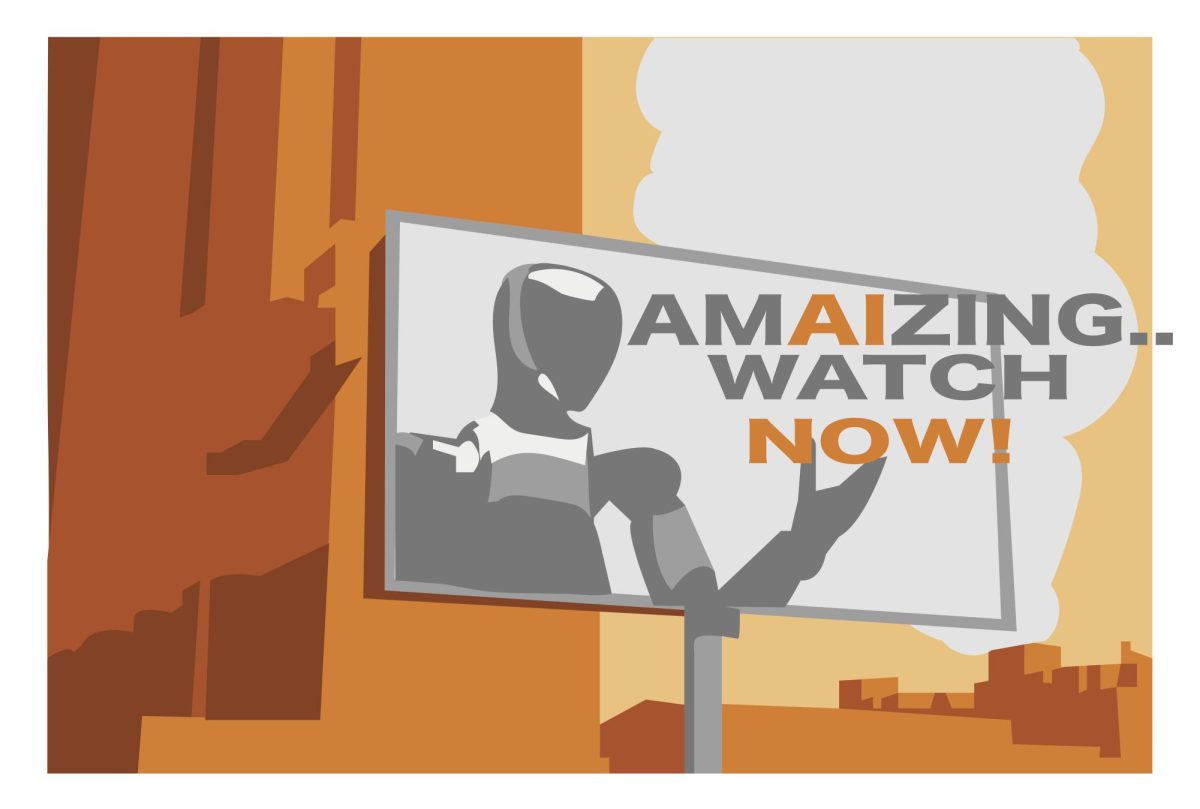
What’s more frightening is that it is so effortlessly avoidable. Hollywood has access to the finest CGI, motion capture, wire rigs and entire teams of well-trained professional stuntmen specifically trained to minimize danger on set. All these technologies are more capable than ever before, and yet directors and studios continue to fail to utilize them. Why? Because “genuine” pain is profitable. When a marketing campaign can boast that an actor did their own near-death stunt, audiences are expected to see the film as more exciting, more real, more worth their money. But in reality, what’s being sold is an illusion of bravery that comes at an actor’s expense.

We’ve seen this cycle before. Tom Cruise famously dangling from the brim of a plane in “Mission: Impossible—Rogue Nation.” Jackie Chan gaining recognition with his deathly, bone-breaking stunts, most of which were permanently scarring. Those stunts became legendary, but they also helped establish an unrealistic expectation: that the strongest action scenes must be the product of true danger. All things considered, the greatest movies aren’t remembered because an actor risked their life for a shot, they’re remembered because of the characters, the story and the imagination that made it possible.
Films are being progressively portrayed not based on their narrative quality but rather how much their actors will jeopardize their bodies. This forces actors to agree to hazardous stunts and frames safety measures as a fabrication rather than an expectation. When the value of a film hangs in the balance of whether or not the prospect is real, the line between performance and peril begins to blur.
The true irony lies in the fact that the audience does not need this much danger to find pleasure in a movie. The fascination of movies has always been in their ability to transport us, that they could make the impossible achievable. The audience does not leave “Spider-Man” questioning the physics of Holland’s actions; they remember the heart of the character. The idea that danger equals quality is a myth – a myth which Hollywood needs to shake off before the next performer loses their life.
Action films will always rely on spectacle, but spectacle should never compromise safety. The studios must rethink the culture of authenticity at any price. The audience themselves must also get involved: to appreciate the art of cinema without expecting an immodesty of suffering. Because at the end of the day, movie magic isn’t made of actors threatening their lives; it’s made of our imagination convincing us that they did.
The views in this column do not necessarily reflect the views of the HiLite staff. Reach Devyn Hansen at [email protected].