























![Cal Carmichael starting for Carmel last season. Carmichael said he wants to do everything he can to help the team win every time he steps on the mound. [Submitted: Cal Carmichael]](https://hilite.org/wp-content/uploads/2026/04/Screenshot-2026-04-13-3.40.48-PM.png)
































![Review: Project Hail Mary is a visually stunning film filled with deep emotion, humor and a heartfelt partnership [MUSE]](https://hilite.org/wp-content/uploads/2026/05/PHM2-2.jpg)
![Review: “Iron Lung” exemplifies the success of suspense [MUSE]](https://hilite.org/wp-content/uploads/2026/04/IronLung-1200x675.webp)
![Review: New F1 regulations prove to be anything but boring [MUSE]](https://hilite.org/wp-content/uploads/2026/04/2-1-1200x675.avif)
![“‘Wuthering Heights’” wasn’t a bad movie—it just wasn’t anything like the book [MUSE]](https://hilite.org/wp-content/uploads/2026/02/wutheringh-960x1200.webp)
![Review: Season 5 of “Stranger Things" delivered the perfect ending despite major mistakes [MUSE]](https://hilite.org/wp-content/uploads/2026/01/ems-810x1200.jpg)
![Review: “Zootopia 2” is a stunning and engaging sequel that elevates the universe [MUSE]](https://hilite.org/wp-content/uploads/2025/12/bjUWGw0Ao0qVWxagN3VCwBJHVo6-800x1200.jpg)
![Review: I have no critiques: “Demon Slayer: Infinity Castle” is amazing [MUSE]](https://hilite.org/wp-content/uploads/2025/12/MV5BOGQ3YWUzYjEtMTJiYy00ZjQ0LWI0YjktYjhiNGVhNGExYTM3XkEyXkFqcGc@._V1_FMjpg_UX1000_-797x1200.jpg)
![Review: Learning to say “I” with “The Fountainhead” [MUSE]](https://hilite.org/wp-content/uploads/2025/12/The_Fountain_Head_1943_1st_ed_-_Ayn_Rand.jpg)
![Review: Java House Fall Menu [MUSE]](https://hilite.org/wp-content/uploads/2025/12/Screenshot-2025-12-01-at-15.10.19-1200x618.png)
![Review: "When I Fly Towards You", cute, uplifting youth drama [MUSE]](https://hilite.org/wp-content/uploads/2023/09/When-I-Fly-Towards-You-Chinese-drama.png)
![Postcards from Muse: Hawaii Travel Diary [MUSE]](https://hilite.org/wp-content/uploads/2023/09/My-project-1-1200x1200.jpg)











Spoiler warning: This review contains minor spoilers for “Vita Carnis”
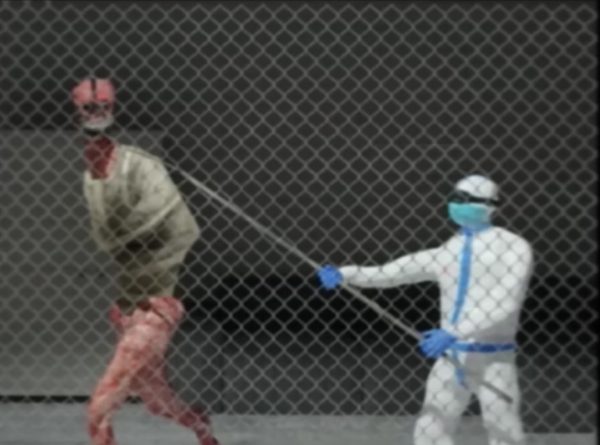 “Vita Carnis”, translating to “living meat” in Latin, is an analog horror series set in a dystopian universe where new otherworldly lifeforms have proliferated globally, threatening ecosystems and the very prospect of human life itself.
For those of you unfamiliar with analog horror, the genre is a relatively new subset of horror fiction, commonly released on platforms like YouTube. The genre is characterized by its reliance on “found footage” often in the form of gritty vintage material and retro television. Not unlike its mainstream horror film counterparts, through the use of strategic back stories, characters, and plotlines, many analog horror series serve as elaborate commentaries, poking criticism at corrupt political institutions, organized religion, the misuse of technology, you name it. Starting with the release of “Local 58” in 2018, there has been a frenzy of new additions to the genre, creating many pop culture icons like “The Backrooms” and the“Mandala Catalogue”.
Starting with the first couple videos of the series, under the guise of tame public service announcements, the audience is introduced to the variety of Vita Carnis, new species bountifully reproducing globally. The series repeatedly releases new episodes in a specific pattern, starting with the least unsettling, but gradually introducing more frightful creatures with more pronounced capabilities to threaten human life.
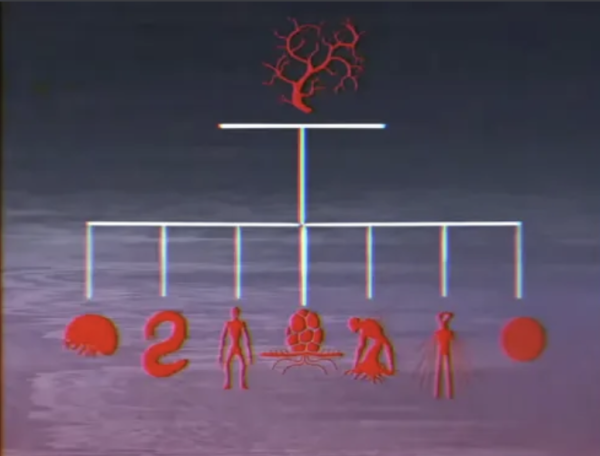
Now I made the mistake of eating while watching the series, specifically sausage, but I seriously do not recommend eating something like that while watching. Going back to the namesake “living flesh,” “Vita Carnis” makes skillful use of body horror, with the fleshy appearance of its creatures, almost raw meat-like. The visual appeal of the series is what truly sets it apart from many other analog horror series, creating a uniquely unsettling aesthetic of raw grotesque violations of biology that we don’t really get enough of these days.
Besides that, I really enjoyed seeing the range of coverage the series utilized, like the found footage of individuals running from “the mimic”, the educational television program, footage of lab experiments and so much more. It really worked to create a comprehensive and eerie depiction of society decaying under the order of the Vita Carnis.
Overall the first season sets a good sturdy foundation for what’s to come. The first portion of the series, with the aforementioned introduction of the different creatures as well as subtle hints detailing the cultist activity and government conspiracies immediately had me hooked.
Subsequently, the second season was a massive step-up. I was extremely impressed with the dramatically enhanced production quality, with the depiction of Vita Carnis reaching new bounds of realism. Moreover, the addition of supplemental interims of the educational program added newfound depth. It’s particularly stellar considering how a single person, Darian Quilloy, was responsible for the entire making of the series.
With analog horror, aside from the thrill of fear, I feel as though its main appeal and defining characteristic is piecing together the lore using whatever clues the creator throws at you. Hidden bits of lore that are difficult to catch unless paying close attention, specially manipulating the video, or even navigating to different websites, books, etc, is what makes the genre so special for the viewer and why I deeply enjoy and many times prefer analog horror to many blockbuster horror films.
Truth be told, many different analog horror series I’ve watched feature a much more complicated universe and hard to decipher occurrence of events. “Vita Carnis” is really in your face about what the story entails (aside from pretty minor “secret lore”), with some videos almost straight-up telling the viewer important developments in the plot. For me personally, I would’ve appreciated a little more nuance. With this in mind, the endings of both seasons, particularly the second season, were very disappointing. They were especially upsetting considering the top-tier world-building and production that led up to the finales. The endings took the story to the deep-end with little to no buildup or sense of the matter. It took away the feeling of unease and intrigue and culminated into a conclusion that left little to no room for speculation or interpretation.
All things considered, “Vita Carnis” has left a profound mark on the analog horror scene, placing itself with the classics. The series mastered the aesthetics and eerie world-building, perfect for those seeking an evening of fearfulness and thrill. In addition to “Vita Carnis,” I would highly recommend checking out other analog horror series like “Monument Mythos” or “Local 58” (my personal favorites). Although this isn’t analog horror, I highly recommend watching “Protect and Survive”, a real-life British instructional video on how to survive during a nuclear disaster released during the Cold War. The fact that this was produced in response to the possibility of such chilling circumstances makes it a very disturbing watch. I mention this film because the production’s filmmaking style is highly reminiscent of many analog horror series and I can only imagine they took inspiration from unsettling public service announcements like this.
On this blog, members of the Carmel High School chapter of the Quill and Scroll International Honorary Society for High School Journalists (and the occasional guest writer) produce curations of all facets of popular culture, from TV shows to music to novels to technology. We hope our readers always leave with something new to muse over. Click here to read more from MUSE.