


















![Cal Carmichael starting for Carmel last season. Carmichael said he wants to do everything he can to help the team win every time he steps on the mound. [Submitted: Cal Carmichael]](https://hilite.org/wp-content/uploads/2026/04/Screenshot-2026-04-13-3.40.48-PM.png)























![Review: Project Hail Mary is a visually stunning film filled with deep emotion, humor and a heartfelt partnership [MUSE]](https://hilite.org/wp-content/uploads/2026/05/PHM2-2.jpg)
![Review: “Iron Lung” exemplifies the success of suspense [MUSE]](https://hilite.org/wp-content/uploads/2026/04/IronLung-1200x675.webp)
![Review: New F1 regulations prove to be anything but boring [MUSE]](https://hilite.org/wp-content/uploads/2026/04/2-1-1200x675.avif)
![“‘Wuthering Heights’” wasn’t a bad movie—it just wasn’t anything like the book [MUSE]](https://hilite.org/wp-content/uploads/2026/02/wutheringh-960x1200.webp)
![Review: Season 5 of “Stranger Things" delivered the perfect ending despite major mistakes [MUSE]](https://hilite.org/wp-content/uploads/2026/01/ems-810x1200.jpg)
![Review: “Zootopia 2” is a stunning and engaging sequel that elevates the universe [MUSE]](https://hilite.org/wp-content/uploads/2025/12/bjUWGw0Ao0qVWxagN3VCwBJHVo6-800x1200.jpg)
![Review: I have no critiques: “Demon Slayer: Infinity Castle” is amazing [MUSE]](https://hilite.org/wp-content/uploads/2025/12/MV5BOGQ3YWUzYjEtMTJiYy00ZjQ0LWI0YjktYjhiNGVhNGExYTM3XkEyXkFqcGc@._V1_FMjpg_UX1000_-797x1200.jpg)
![Review: Learning to say “I” with “The Fountainhead” [MUSE]](https://hilite.org/wp-content/uploads/2025/12/The_Fountain_Head_1943_1st_ed_-_Ayn_Rand.jpg)
![Review: Java House Fall Menu [MUSE]](https://hilite.org/wp-content/uploads/2025/12/Screenshot-2025-12-01-at-15.10.19-1200x618.png)
![Review: "When I Fly Towards You", cute, uplifting youth drama [MUSE]](https://hilite.org/wp-content/uploads/2023/09/When-I-Fly-Towards-You-Chinese-drama.png)
![Postcards from Muse: Hawaii Travel Diary [MUSE]](https://hilite.org/wp-content/uploads/2023/09/My-project-1-1200x1200.jpg)











For senior Rachel Engbrecht, donating blood has always been something she had strived to do at least once in her life. Because donating blood at this school was so accessible and efficient, Engbrecht said it only felt right to participate. She explained she was healthy enough to donate blood, and it didn’t feel right to pass up the chance.
“I really wanted to be able to give to people. Since I’m healthy enough and able to donate blood, I feel like it’s something that I should do at least at some point in my life,” Engbrecht said. “I thought, why not do it now because it’s available in high school? I have enough blood, you know; I might as well give some to people who actually need it.”
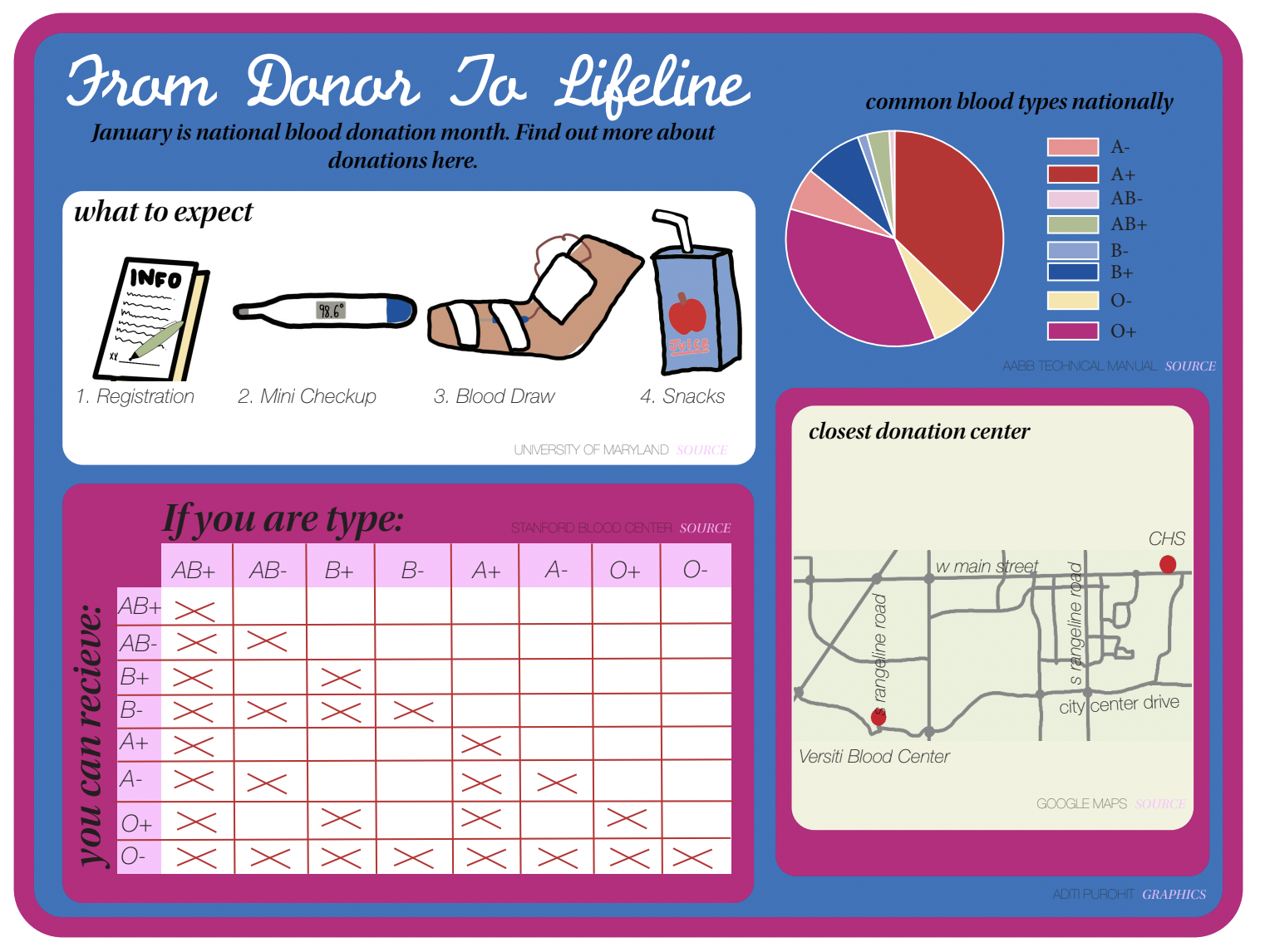
Engbrecht is part of a much larger group who have stepped up to donate blood. National Blood Donor Month, celebrated in January, recognizes the selfless actions of individuals such as Engbrecht and also encourages others to donate blood. This school also hosts a spring blood drive, giving students the opportunity to donate blood to those in need. According to America’s Blood Centers, there were 6.5 million blood donors in 2021. In addition, there were a total of 11,784,000 units of blood collected in the United States, which was an increase of 1.7% from 2019. Similar trends of participation could be seen at this school, according to student body president Kaitlyn Ho.
“The past few years, we’ve seen a higher percentage of people who are actually showing up for the blood drive, so that’s been really good,” Ho said. “Thinking back, my freshman year, we had a lot of people who would sign up, but then not show up. We’ve had a way higher percentage of people actually showing up and being able to donate in blood units.”
Janice Spickelmier, senior account manager and donor recruiter at Versiti, said schools made up almost 40% of the local blood supply in Indiana.
“The CHS blood drives are one of the largest high school drives in the state. And last year, collecting over 300 units from both blood drives, your school had the largest collections of blood from any high school in the state,” Spickelmier said. “The impact from your blood drives is essential to maintain blood for our local hospitals.”
Preparing for a blood drive
When it came to donating, Engbrecht said she was nervous leading up to her appointment.
“I was a little bit scared, but also I know many people who’ve done it before and have been totally fine and not passed out and not thrown up, so I wanted to do it and was kind of excited,” Engbrecht said.
However, when the moment came, she said the actual experience was far easier than she expected.
“Honestly, the lady who was helping me was really nice. Even though they had a bunch of people coming that day, I feel like they were all still in high spirits and good energy. They were always checking in and making sure you’re doing well,” Engbrecht said. “It was cool to look at the tube they stuck in your arm and just see like the blood flowing into the little bag and the bag just filling up.”
Spickelmier said Versiti aims to educate students about blood donation beforehand to ensure a positive experience.
“At our high schools, we try to make sure that students are informed about blood donation and the reasons why their donations are so critical to helping local hospital patients. We have a program called ‘Leaders for Life’, which builds leadership skills, provides community service opportunities and offers recognition like graduation cords,” Spickelmier said. “It also provides resources and guidance for students hosting blood drives and makes the donation process itself more engaging and comfortable.”
Engbrecht said she was surprised by how much preparation went into donating blood.
“They were saying you needed to eat a lot before doing it. I ate breakfast in preparation, but I still needed to eat a bag of cookies and chips and then drink some water before actually doing it,” Engbrecht said.
Ho said the Senate started preparing long before students even received the sign up form.
“I am in contact with the blood center lady over the summer to work on scheduling dates, and then the blood drive happens early September. So honestly, we start promoting it two or three weeks into school,” Ho said.
Ho also added the Senate continues to work throughout the event, such as reaching out to students who forget their appointment, handling deferrals and dealing with any unexpected issues.
“In past years, we have had power outages, or there was a fire alarm that went off during the blood drive, and so that is always a huge complication. It really throws a wrench in things,” Ho said. “For this year, there were just a lot of moving parts.”
Spickelmier said students who are unable to donate can help in various ways.
“Sharing educational bullet points on why blood donation is so important and the impact their donation can have on a patient in need, can help spread the word to get as many people as possible to participate in the blood drives,” Spickelmier said. “We also have those unable to donate help with greeting the donors, helping keep them calm as they are waiting for their blood donation and talking with them after donating about the impact they have made to those in need.”
Engbrecht said simple things such as snacks and pajama pants helped students feel more motivated and comfortable to donate.
“They were giving out pajama pants, and I feel like giving out snacks and stuff made students really happy. It was also a cool thing if you showed up to class late after donating blood. I feel like that definitely convinces students to donate,” Engbrecht said.
Ho said the Senate relied on several tactics to promote the blood drive.
“We post things on our Instagram, so we’ll make Instagram posts or flyers, and we’ll post reels. We go to all of the SSRTs or lunches sometimes where people can talk to us. It’s a lot of sharing information with friends, talking with peers, and telling people in your classes,” Ho said.
The importance of blood donations
Engbrecht said she learned this school was among one of the largest blood drives in Indiana, and it was interesting to see that not only adults and college students could donate, but also high schoolers.
“I feel like donating blood is not like a big thing that a lot of high schoolers usually do. I can definitely think of more like college students who do it or like adults who do it regularly,” Engbrecht said. “I think it’s cool how we host one of the largest high school blood drives in Indiana.”
Spickelmier said blood drives are one of the simplest and easiest ways to make a large difference in someone’s life.
“Taking just 30 to 45 minutes out of your day to donate blood can save three lives. It is less time than going to a movie or watching a football game. Less than an hour of your time can have such a huge impact for someone,” Spickelmier said. “ It is such an easy process that impacts so many lives and their families lives, that if people would just donate every 56 days, they can be life-changers and life savers. My own mom was able to live a little longer during her cancer treatments, due to blood donors.”
Ho said this school’s blood drives were especially important to local hospitals.
“Carmel is the biggest blood drive in the state, and so it’s really important that we kind of work to meet a goal,” Ho said. “The week before we do the blood drive for Carmel, Versiti actually has meetings with a lot of hospitals, and they plan out specifically where the blood units from Carmel are going to go. They schedule surgeries around the blood that they’ll receive from us.”
Spickelmier also said school blood drives introduced students to blood donation, which would hopefully motivate them to donate in the future and replace the aging donor population.
“Schools can help educate young people on how donating blood can impact others. By teaching students about the importance of blood donation, our goal is to set them up to become lifelong donors,” Spickelmier said. “The ‘baby boomers’ are starting to reach an age where they are no longer able to donate and they make up the majority of blood donors. It is imperative that the younger generations start donating now to ensure there is blood on the shelves tomorrow.”
Impacts
Seeing all of the other students donating blood helped Engbrecht feel like she was connected to something bigger than a single blood donation appointment.
“I feel like you get a sense of community when you see the people who show up on the day of the blood drive,” Engbrecht said. “You can see people from your class or a person from a few years ago, and it’s just amazing to see that we’re all doing this one thing together. It’s like all the Carmel students can come together and do this one thing.”
Engbrecht also said blood drives in high school can encourage people to donate blood throughout their entire life.
“It’s cool that CHS introduces blood donations in a high school environment so that you can feel comfortable around it and not be scared to do it,” Engbrecht said. “I feel like if you start donating blood, then it encourages you to continue donating blood throughout your life or make you feel more willing to give to people.”
Engbrecht said the idea of her blood helping and saving other people made the experience meaningful.
“They said it could save up to three lives. It’s good to know I could help save somebody,” she said.
Spickelmier further explains the impact of CHS blood drives, “The CHS blood drives on average collect around 160 blood products, meaning the CHS blood drives alone impact 480 patient lives. To put this into perspective, the average blood drive in Indiana collects around 15 units of blood, so a blood drive as large as yours at Carmel is so important for our hospital patients as we collect so many blood products at one blood drive.”
Ho said the impact of donating blood makes her proud.
“I think that the most rewarding part is knowing that the blood is going immediately back to your community, and it’s really saving people’s lives. I think it’s so important just, like, the idea of giving back to your community,” Ho said.
Ho also added that students were able to donate 165 units of blood during the fall blood drive.
“It makes me very happy and very proud to be a Greyhound, you know, that people are so willing to give their blood to others to help to give back to the community,” Ho said. “Especially in Carmel, we do a lot of giving back, and a lot of times, monetary donations are a huge emphasis. I really love that blood donations are something you can do without having to give a ton of money. It’s just a really good way to give back.”
Spickelmier said she hopes the partnership between Versiti and CHS will carry on and save more lives.
“I hope that we can continue to educate students on how their support in hosting the blood drives are and will continue to be a reason for so many Hoosier patients to survive. Our hospitals depend on the blood products collected every spring and fall to help those fighting cancer, medical emergencies, traumas, helping patients with chronic diseases, and mothers and newborns,” Spickelmier said. “The impact of the CHS blood drives literally save thousands of lives in our community and we need students to continue to be the reason so many people survive and live long lives.”
Ho emphasized the importance of being educated and involved in your community.
“I feel like pretty much everyone you know has probably had a surgery at some point that has required blood. You never know when you are going to have to go into surgery where you’re going to need donated blood,” Ho said. “I think it’s just important to keep giving back to your community and stay educated. I had no idea that (blood donation) was such a critical need in Indiana until (Versiti) came and talked to us about it.”
Engbrecht said, “I feel like everybody should consider donating blood because it’s a good opportunity to give to people because you never know if one day you might need blood. Donating blood and helping those people who do need blood is a great thing to do because one day it could be you and you would appreciate it if someone had blood ready for you.”