
















![Cal Carmichael starting for Carmel last season. Carmichael said he wants to do everything he can to help the team win every time he steps on the mound. [Submitted: Cal Carmichael]](https://hilite.org/wp-content/uploads/2026/04/Screenshot-2026-04-13-3.40.48-PM.png)

































![Review: Project Hail Mary is a visually stunning film filled with deep emotion, humor and a heartfelt partnership [MUSE]](https://hilite.org/wp-content/uploads/2026/05/PHM2-2.jpg)
![Review: “Iron Lung” exemplifies the success of suspense [MUSE]](https://hilite.org/wp-content/uploads/2026/04/IronLung-1200x675.webp)
![Review: New F1 regulations prove to be anything but boring [MUSE]](https://hilite.org/wp-content/uploads/2026/04/2-1-1200x675.avif)
![“‘Wuthering Heights’” wasn’t a bad movie—it just wasn’t anything like the book [MUSE]](https://hilite.org/wp-content/uploads/2026/02/wutheringh-960x1200.webp)
![Review: Season 5 of “Stranger Things" delivered the perfect ending despite major mistakes [MUSE]](https://hilite.org/wp-content/uploads/2026/01/ems-810x1200.jpg)
![Review: “Zootopia 2” is a stunning and engaging sequel that elevates the universe [MUSE]](https://hilite.org/wp-content/uploads/2025/12/bjUWGw0Ao0qVWxagN3VCwBJHVo6-800x1200.jpg)
![Review: I have no critiques: “Demon Slayer: Infinity Castle” is amazing [MUSE]](https://hilite.org/wp-content/uploads/2025/12/MV5BOGQ3YWUzYjEtMTJiYy00ZjQ0LWI0YjktYjhiNGVhNGExYTM3XkEyXkFqcGc@._V1_FMjpg_UX1000_-797x1200.jpg)
![Review: Learning to say “I” with “The Fountainhead” [MUSE]](https://hilite.org/wp-content/uploads/2025/12/The_Fountain_Head_1943_1st_ed_-_Ayn_Rand.jpg)
![Review: Java House Fall Menu [MUSE]](https://hilite.org/wp-content/uploads/2025/12/Screenshot-2025-12-01-at-15.10.19-1200x618.png)
![Review: "When I Fly Towards You", cute, uplifting youth drama [MUSE]](https://hilite.org/wp-content/uploads/2023/09/When-I-Fly-Towards-You-Chinese-drama.png)
![Postcards from Muse: Hawaii Travel Diary [MUSE]](https://hilite.org/wp-content/uploads/2023/09/My-project-1-1200x1200.jpg)











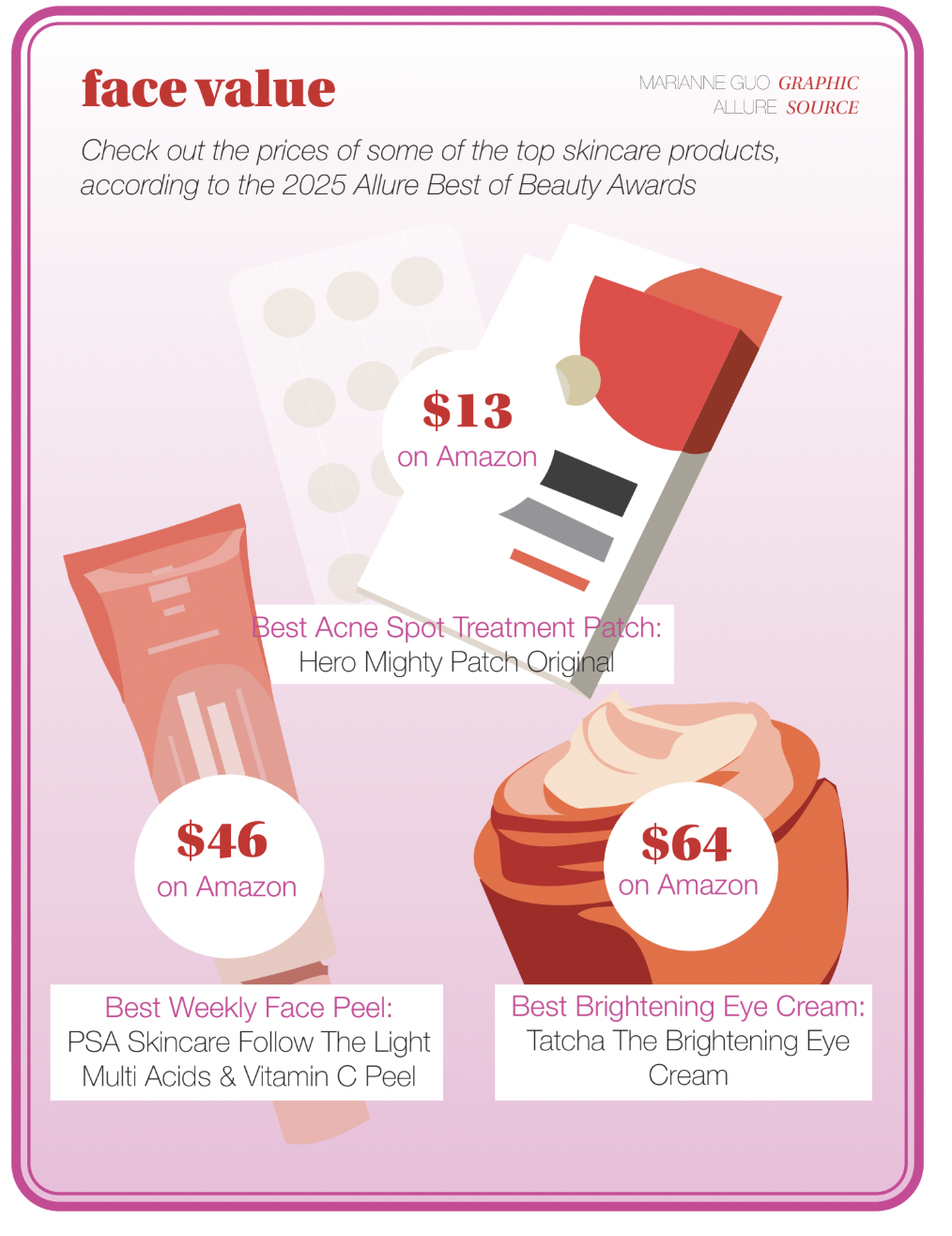
For junior Yoon Lee, self-care has slowly shifted from something meant to be comforting and personal into something that often feels tied to trends and spending. With skincare, makeup and haircare routines constantly going viral online, Lee said it can be difficult to tell when a purchase is truly necessary or simply influenced by what is popular.
“Honestly (I buy skincare) pretty often. I’m definitely influenced by TikTok and instagram trends so I end up buying things because they’re popular, not always because I actually need them,” Lee said.
Across the country, the self-care industry has grown into a massive consumer market, with brands and influencers promoting products as essential tools for confidence and self-love. For many students, this commercialization creates the idea that self-love requires constant purchasing. Lee said fast-moving trend cycles contribute to overconsumption, leaving many products unused and reinforcing guilt around spending.
“Fast trends probably make me collect more half-used or unused products than I realize,” Lee said. “A lot of the time, I just feel like I wasted money.”
Lee added that social media platforms often take advantage of emotional vulnerability, especially during times of stress or insecurity.
“When I’m stressed, I tend to overspend,” Lee said. “And when my confidence drops, especially about my appearance, I impulse buy more self-care products. It sometimes feels like I’m chasing trends instead of doing what actually helps me.”
While some purchases genuinely improve her routine, Lee said the constant pressure to keep up can feel empty rather than fulfilling.
“Sometimes I feel like I’m just chasing trends instead of doing what actually helps me. A few products have genuinely helped but buying too many things can feel empty like it’s not really improving anything,” Lee said. “When I actually research a product and choose something that works for me, it feels like a more meaningful purchase, like I’m taking care of myself in a way that actually matters.”
AP Human Geography teacher Allyson Cooksey said these pressures reflect a broader pattern within American consumer culture. According to Cooksey, the idea of tying self-worth to material possessions has long existed, but social media has intensified its impact on teenagers.
“That’s kind of always been part of the American way, ‘keeping up with the Joneses,’” Cooksey said. “But when it’s new things and it’s marketed directly towards teenagers, I think it can be a little harmful because some of it’s really expensive too.”
Cooksey said consumer-driven self-love can have both positive and negative effects. While it may encourage people to take care of themselves, she said the monetary focus can be damaging, especially for younger students still learning how to build self-worth.
“I think it does a good job of encouraging people to take care of themselves, but also the monetary connection to it and the fact that sometimes I feel like it’s directed towards teenagers or children specifically (is wrong,)” Cooksey said. “You guys (teenagers) aren’t like fully developed yet and you’re still learning how to love yourselves, I think it can be harmful.”
She also said that schools, families and communities play a role in promoting healthier, non-commercial approaches to self-care.
I think utilizing our school resources would be a good way to, kind of like streamline that process a little bit,” Cooksey said. “if there’s a way to, like fund it or subsidize it through either like government programs or grants or things like that to allow those like self-care opportunities to be available for all people and like all students and not just those who can afford the expensive things that they’re seeing on social media, I think that would be beneficial.”
“It’s almost like a status symbol,” Cooksey said. “You feel like you need certain items to say you’re taking care of yourself, and when that’s connected to self-worth, it’s hard.”

Junior Sid Eswaran said he has noticed similar pressures in fitness culture, where self-care is often tied to appearance and validation rather than health. He said gym culture has increasingly shifted toward trends driven by influencers and unrealistic expectations.
“Before, the gym was a place where people would go with a goal to just be better as a person and try to be the best versions of themselves. Eswaran said. “Now I feel that people will see these models and gym influencers online and try to be like them. When they look at themselves in the mirror and they see that they aren’t as good as them they become depressed and overwork themselves to the point where they end up getting hurt. At this point, they are solely focusing on appearance.”
Eswaran said the commercialization of fitness has led to increased pressure to buy supplements, routines and memberships in order to be considered “healthy.”
“Many gym influencers have started to push a lot of supplements on to their viewers such as protein powders, creatine, and pre-workouts.” Eswaran said. “I do see a lot of influencers pushing it out though by saying that it is the only way to get healthy, at the end of the day, they’re paid to say that.”
Eswaran also said redefining self-care means moving away from consumer-driven expectations and focusing on internal fulfillment. Rather than expensive products or extreme routines, he said self-care can be as simple as self-acceptance.
“Comparison is the thief of joy,” Eswaran said. “If you just focus on yourself and don’t worry about others, you’ll see real progress.”